
Hello, GenderWild friends! Today’s post is an interview with newly published author, LGBTQIA2S+ community organizer, and my very good friend, Troy Ford. Troy’s book, Lamb: a novel in snapshots, was released in June of this year, just in time for Pride 2025. I’m very honored to share space with Troy here, and I encourage you to subscribe to his publications, Qstack | The LGBTQIA+ Directory of Substacks and Ford Knows Books.
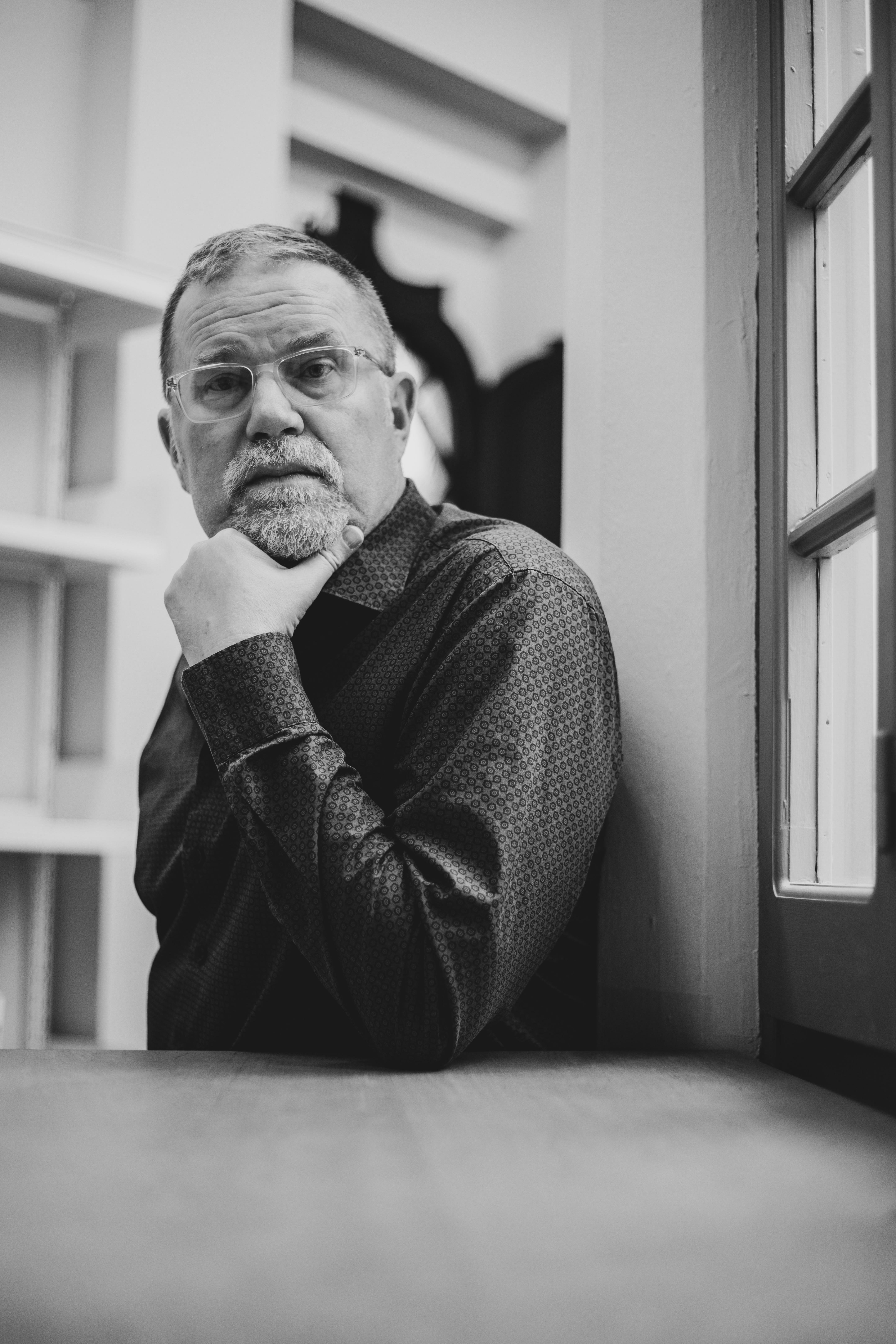
For those of you not familiar with the recently released novel, Lamb, I’m including the book description here.
D is shaken when his mercurial friend Lamb vanishes just before they’re set to move in together. The news of his death three years later shadows him like a ghost.
Sifting through Lamb’s journals decades later, D uncovers a raw, intimate portrait of a sensitive misfit navigating a world that never understood him.
From their first meeting at an elite all-boys school to the chaos of 1990s San Francisco, Lamb’s story unfolds in a tangle of tenderness and rebellion, anguish and adventure. Through journal entries, letters, poetry, and stories, Lamb is a coming-of-age in snapshots that captures the dazed spirit of young men searching for belonging in the aftermath of the AIDS crisis.
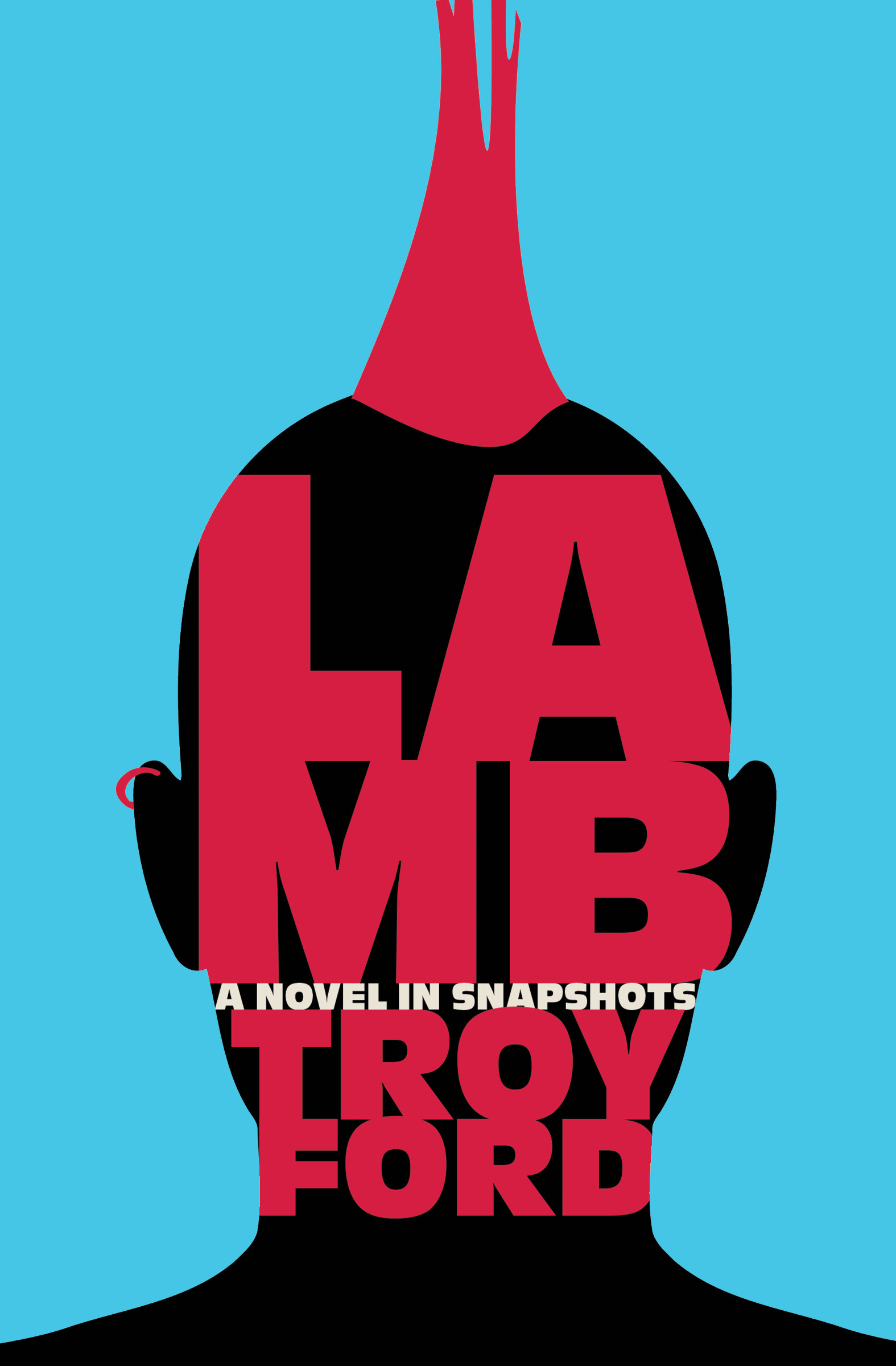
Troy, welcome to GenderWild! You and I have been friends for a while now, I think since you created Qstack a little over a year ago here on substack. During that time you were also finishing and regularly posting chapters of Lamb. I’d love for you to tell us a bit about that experience, specifically serializing your work online to build a readership for it.
First, did it work? Did you find that serializing a novel on Substack built a community around the future book?
Thanks for having me, brother Robin! And absolutely, yes—I can’t emphasize enough that every single expression of support, kind review, endorsement, or recommendation is helpful, not just to spread the word, but to anchor us in a community of well-wishers that genuinely wants us to succeed.
Particularly for authors from marginalized communities, there are forces working against our success, including the inner critic that tells us to be afraid of vulnerability and honesty. If you’re like me, the messaging you received from society early on was that you have no right to dignity, and that to be your authentic self in your writing and in life is not courageous but foolhardy, deserving of whatever denigration bigoted people want to heap on you. It’s all lies. But there is truth in accepting help from a community that treats you with kindness and respect, and that’s what I’ve found on Substack.
You probably will not see a seismic shift in numbers, reviews, or sales from serializing your book, and that’s OK. Every “well done” you receive nurtures your path forward.
And second, how did that impact your creative process, particularly in the act of transforming your work into a complete novel?
I was thrilled by the comments I received on the first few chapters of Lamb. Though I already had a sense that Substack was a community that errs on the side of kindness, I really needed to feel that putting my work out in the world was not an invitation to pick apart my best efforts and shame me into doubt and silence.
I had just such an experience in a creative writing class in high school, in which the teachers felt entitled to ridicule my work publicly. “Brutal honesty” too often emphasizes the brutalness, and it contributed to my writer’s block for over thirty years.
In creative work, our truest expressions are accessed from an unfiltered and even childlike center; imposing a framework of rules, authority, and “taste” through shaming teaches us to second guess the original inspiration, rather than valuing it as the raw material that a more mature craft will shape into its best form.
There is no “endgame” for artists, even though agents, publishers, reviews, and bestsellers very often pretend to be that goal. There is only process. As long as you keep going and keep learning, you are already a successful artist.
One of the things I find most compelling about this story is the way in which it’s told. We see the world through D’s eyes, but D is reading through Lamb’s old journal, seeing Lamb through Lamb’s eyes. It’s a very unique way to craft a story. For me this feels like a really beautiful way to approach knowing and loving someone.
What inspired you to approach telling the story of D and Lamb in this way?
There was a strong element of forgiveness involved, which mirrored my own personal journey of getting sober prior to starting this book. I’ve had to reckon with feelings of shame and remorse that accumulated over a lifetime, and a big part of my journey has been accepting that I was (and am) a flawed human being, as we all are, and yet still deserving of compassion.
Likewise, D had a lot to forgive Lamb: he ghosted his best friend of fifteen years; he was for most of that time a neurotic, self-centered mess who could barely treat himself with kindness much less anyone else. From the point at which Lamb disappears to the unearthing of his journals, letters, and stories, D has had decades to mature. He sees Lamb with fresh eyes, and he’s able to select and convey the episodes that also lead us to compassion for this terribly flawed young man.
How much of your own story are we reading along the way?
There are snippets, fragments, and whole scenes of my own life in most of the chapters, but they’ve been so changed and adapted to the purposes of the story, embellished with entirely invented parts, I would never call this auto-fiction. Like most writers, my life provides many of the colors and raw materials for the final product.
There’s really no question that I’m a big nerd for queer stories of all kinds. Finding queer books when I was an adolescent or teen, or even in young adulthood, was pretty challenging. There’s a lot more out there today, but now we’re seeing a rise in book banning lists, and the cultural commentary on queer books—and queer lives—is changing rapidly.
What are your feelings about the current state of LGBTQIA2S+ books and media in today’s landscape?
I don’t think the media landscape has yet to digest the political zeitgeist of censorship and repression, in the same way that it was still catching up to acceptance of queer and other minorities’ human rights prior to the current regime.
When I was querying my first novel, I saw lots of agents who stated they were actively seeking queer voices but had not actually signed any queer writers; my impression was that they wanted to signal their inclusivity without really believing that queer stories could break out beyond a queer audience to national attention.
In the meantime, queer books and stories are still advancing in the mainstream even as the current regime attempts to erase us, and we will continue to see progress as long as we resist the petty—and temporary—powers arrayed against us.
What does this mean for authors and publishers of queer books?
There is enormous opportunity for queer authors and publishers, mainly because the Big 5 and traditional media move at such a glacial pace they can’t help but overlook anything with urgent, upstart energy until it’s already exploded. A million dollars in sales means very little to a publisher which measures overall revenue in the billions across all the different genres they produce; to a small or boutique queer publisher who is building a roster of authors, and a network of readers and reviewers, even a fraction of that same amount is like rocket fuel for attracting support and community.
Book bans and censorship? If they weren’t such an egregious violation of a fundamental right, they’d be laughable. If anything, they help us; where advertising and marketing often fail, telling someone they can’t read something is the only sure way to make them want to read it.
Writing a book comes with so many emotions and experiences.
Can you tell us about anything that happened along the way that you truly did not expect?
Hitting #1 on the Amazon Hot New Release for LGBTQ+ Literary Fiction list my first week was a shock. It only lasted a day, but I was so incredibly grateful to the people who made that possible—supporters on Substack, friends, and family. We don’t create art for the numbers, but good numbers don’t hurt.
Was something surprisingly easy or difficult?
The writing of Lamb came amazingly easy, unlike the previous book or even the one I’m writing now. Maybe the schedule—2,000 words max, every two weeks—felt relatively relaxed. Maybe because it was broken down into episodes that read like short stories, pesky things like transitions and the passage of time and an overall narrative arc sort of took care of themselves. I wish every book were that easy to write.
Now that you have one successful book out there in the world, what’s next? Are you writing more fiction? Considering a nonfiction title?
I am currently writing the next book in the Lambiverse, a story about the narrator D and his life about twenty years after the events of the first book, around the time that he begins excavating Lamb’s papers. While he starts revisiting his friendship with Lamb, he experiences an upheaval in his own life.
I’d like to submit more articles and essays outside of Substack. We have a wonderful writers’ incubator on this platform, but there is a very wide world beyond it and that’s the next hill for me to start climbing. The first was my article in Writers Digest, “How Substack Helped Me Publish My Novel at 55.”
Does it feel different to write something new now that you can stare at your own book on the shelf?
Only in the sense that I’ve done it, success, I no longer struggle with the idea of whether I can do it because it’s done. Struggling with writers block for as long as I did, and with such a great fear about how my writing would be received, I’d built it up into such a boogeyman that I never actually saw beyond to some of the greater challenges in store for me. None of them will ever be quite so fearsome as just getting the first one done.I don’t think creativity can really thrive when it’s surrounded by a dark cloud of anxiety.
Is there anything else you wish I would ask you that I didn’t think about?
I’m sharing the things I’ve learned along the way in my series “The Road to Published” on Ford Knows Books. In a publishing environment where many of the old rules no longer serve, and maybe never did for marginalized folks, I’m talking about how to be adaptable, how to pivot, and how to be brave in the face of so many challenges it’s hard to know which way to turn when many gates remain closed. I call it the “choose your own adventure approach to writing and publishing books” because there are rarely perfectly laid plans; there’s just aiming, taking your shot, and recalibrating for the next attempt.
You can purchase Troy Ford’s Lamb using any of the links below. Why not buy two and send one to a friend??
Thanks for reading GenderWild Press! Subscribe for free to receive new posts and support my work.
A million thank-you’s to Troy for sharing the details of his book, his authorly process, and his presence on Substack and on the bookshelf. Queer writers always have a home here on GenderWild.
Robin, GenderWild founder and friend

 GenderWild Press
Appreciate you so much, Robin – thank you for this feature! T.
LikeLike